
DigiD Pentest: What it is, why it's necessary, and how to prepare
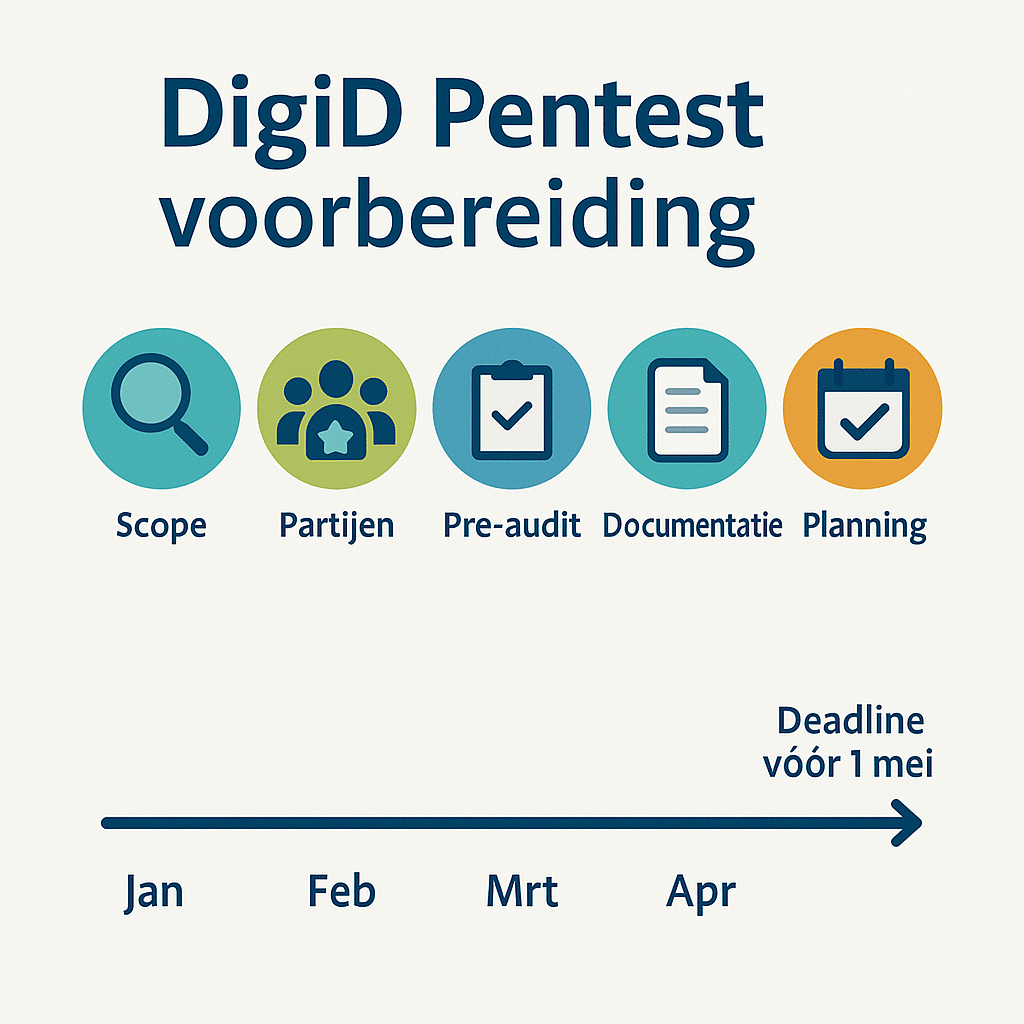
A staple of the DigiD audit is the DigiD Pentest: a technical test that checks the security of your DigiD connection. The requirements are set, the deadline is fixed, and the responsibility lies with the organization to be compliant every year.
Need help with your DigiD audit?
Our consultants are happy to help you.

What is a DigiD Pentest
A DigiD Pentest is a targeted penetration test on a web application or system connected to DigiD. The goal is to test whether the security meets the requirements of Logius and the guidelines of the NCSC. The test is part of the annual security assessment for DigiD, which is mandatory for organizations with a DigiD connection. An independent auditor processes the results of the pentest in the audit report. This allows the organization to demonstrate that digital access via DigiD is sufficiently protected against vulnerabilities.
Why is a DigiD Pentest mandatory?
The DigiD Pentest is mandatory because the use of DigiD provides direct access to personal data and confidential government services. A vulnerability in such a connection can have major consequences: think of identity fraud, data breaches, or misuse of public systems. To mitigate this risk, Logius (on behalf of the government) has included the pentest in the mandatory ICT security assessment DigiD.
The underlying idea is clear: only organizations that annually demonstrate that their DigiD environment is sufficiently secured will be allowed to maintain access to the DigiD system. That assessment is based on the DigiD standard framework v4.0, which includes security guidelines based on the NCSC. An independent security auditor then checks whether these guidelines have been applied correctly.
Without a demonstrable penetration test, it is impossible for supervisors to assess whether the connection is secure. Therefore, a report must be submitted annually demonstrating that vulnerabilities have been investigated and, where necessary, resolved. This measure is therefore not a formality, but a safeguard for the security of digital public services.
How to prepare for a DigiD Pentest
Thorough preparation is essential for a smooth pentest process and a positive audit outcome. By taking the right steps beforehand, you can avoid surprises and reduce the chance of the report being rejected. Below, we discuss the most important aspects of preparation.
Defining scope and assigning roles
Start by defining the scope: which systems, applications, and interfaces are covered by the DigiD connection? Document which components need to be tested and who is responsible for what. Appoint a coordinator who will liaise between the pentester, the auditor, and internal departments such as IT and security.
Choose experienced parties
Collaborate with a RE auditor familiar with the DigiD standard framework. Discuss with them whether it is necessary to collect additional statements, such as a TPM statement from an external supplier. Choose a pentesting party that demonstrably has experience with DigiD assessments, so they are familiar with Logius's technical requirements.
Plan a pre-audit or baseline measurement
An internal pre-analysis or pre-audit helps to identify potential shortcomings in advance. This prevents known issues from surfacing only during the official pentest. Various auditors and consulting firms recommend this as a way to save time and remediation costs.
Gather relevant documentation
Ensure that the necessary information is ready for the pentester: network diagrams, access credentials, security policies, configurations, and any previous test results. This will expedite the process and prevent the pentest from being performed incompletely.
Start on time
Ideally, you should start preparations in January. This allows time to resolve findings and conduct a retest before the submission deadline. Do not let the planning depend on available audit slots in March, as the time between testing and reporting is often short.
Think ahead: planning and follow-up
Coordinate with the auditor on the deadline for the final report. Ensure there is room for communication regarding findings, corrections, and explanations. A pentest report without follow-up is often insufficient: demonstrate that the identified risks have actually been remediated.
Practical checklist and conclusion
A DigiD Pentest requires more than just technical execution. It is a mandatory part of a broader compliance process, where timing, communication, and documentation are at least as important as the test itself. Below is a compact checklist to stay on top of the preparation:
- Map out the scope of the DigiD integration completely
- Appoint an internal point of contact or project manager.
- Engage a RE auditor and a DigiD-experienced pentester in a timely manner.
- Consider having a pre-audit performed for insight and preparation.
- Gather all relevant documentation and access information
- Please consider the fixed reporting deadline (before May 1st)
- Allocate sufficient time for addressing findings and for a retest.
Good preparation prevents time pressure and increases the chance of a smooth audit process.
Would you like to brainstorm about the approach or get advice on a DigiD audit and pentest? Contact us. We'd be happy to help you think things through.